Deutsch
 English
 Español
 Français
 Magyar
 Polski
 Română
 Slovenský
 Slovenščina
 中文
中文音楽作品が作曲者から演奏者へ届くまで
楽譜出版社の使命は、紙媒体またはコンピュータ上の原稿を、演奏者にとって読みやすく、創造意欲をかき立て、使いやすい形に整えること、そして作品の普及、流通および適法な利用を確保することです。
75年にわたる経験を礎に、私たちはこの尊い仕事に思慮深く、献身的に、そして情熱をもって取り組んでいます。
作品を私たちに託してくださる作曲家および音楽教師の皆様に感謝申し上げます。
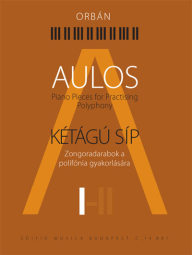
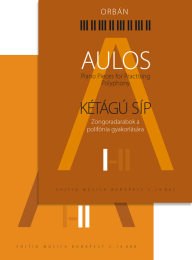
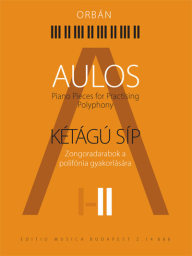
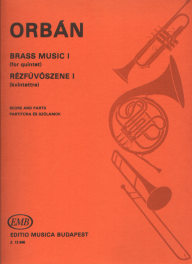
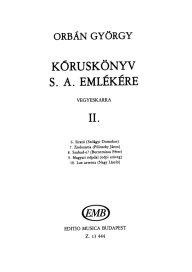
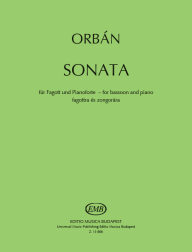
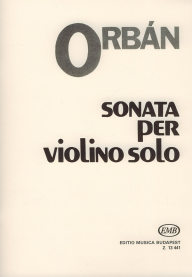
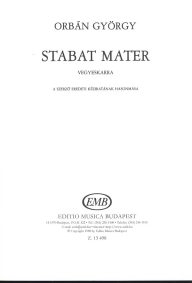
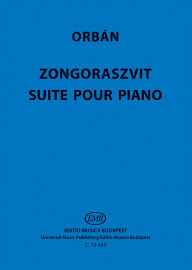
Orbán, György
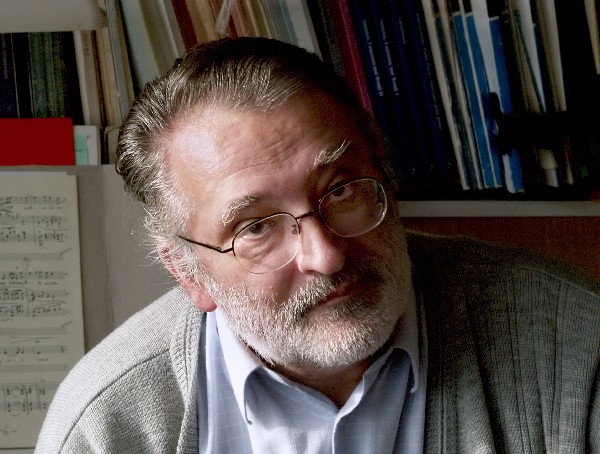
György Orbán (born 12 July 1947 in Târgu Mureș, Romania) is an internationally recognised composer whose music is rooted in Hungarian folk traditions, often blending characteristic national idioms with grotesque, humorous, and at times satirical elements. His early works were influenced by avant-garde trends, but his style later took a neo-Romantic turn. He frequently evokes the sound and formal ideals of earlier periods in music history. A defining feature of his music is its naturally appealing sonority and its sense of classical balance and proportion. In addition to his stage works, oratorios, instrumental and vocal compositions, he has also composed film scores and incidental music for the theatre.
He studied composition between 1968 and 1973 at the Music Academy in Cluj-Napoca with Sigismund Toduţă and Max Eisikovits, and music theory with Jagamas János. From 1973 to 1979, he taught music theory and counterpoint at the same institution. After moving to Hungary, he worked as a music editor at Editio Musica Budapest from 1979 to 1990, and from 1982 he served as professor of music theory and composition at the Franz Liszt Academy of Music.
His work has been recognised with several awards, including the Bartók–Pásztory Prize (1991), the Erkel Prize (2002), the Artisjus Prize (2005), and the Kossuth Prize (2014).