Deutsch
 English
 Español
 Français
 Magyar
 Polski
 Română
 Slovenský
 Slovenščina
 中文
中文音楽作品が作曲者から演奏者へ届くまで
楽譜出版社の使命は、紙媒体またはコンピュータ上の原稿を、演奏者にとって読みやすく、創造意欲をかき立て、使いやすい形に整えること、そして作品の普及、流通および適法な利用を確保することです。
75年にわたる経験を礎に、私たちはこの尊い仕事に思慮深く、献身的に、そして情熱をもって取り組んでいます。
作品を私たちに託してくださる作曲家および音楽教師の皆様に感謝申し上げます。
Balassa, Sándor
Biography
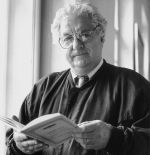
Sándor Balassa was born on 20 January, 1935. Having spent his childhood in the countryside, his musical career started in Budapest. After finishing his studies in the Béla Bartók Conservatory, he was working as a technician in a factory. Then, in 1960, he continued his studies at the Budapest Academy of Music where he studied with Endre Szervánszky, graduating in 1965.Having finished his studies, he joined the Hungarian Radio and he worked as a recording producer.
From 1981 he was teaching instrumentation at the Budapest Academy of Music, first as a senior lecturer, then as an associate professor, then, from 1993 to 1996, the year of his retiring, as a professor. In 1996 he created a foundation, called Foundation for the Academy of music, to support the activities of his institution.
Among his compositions the most outstanding ones are, beyond his numerous choral and chamber works, the large-scale orchestral pieces like Glarusi ének (Chant of Glarus,1978), Hívások és kiáltások (Calls and Cries, 1981) or A Nap fiai (The Sons of the Sun, 1995), furthermore his four operas, Az ajtón kívül (The Man Outside, 1986), A harmadik bolygó (The Third Planet, 1989), Karl és Anna and Földindulás (The Catastrophe, 2001).
He died on 14 May 2021 in Budapest.
His prizes and awards
His Requiem Kassák Lajosért (Requiem for Lajos Kassák) was awarded the title “Distinguished composition of the year” at the Tribune in Paris (1972); Erkel Prize (1972); Artist of Merit of the Hungarian People’s Republic (1978); Kossuth Prize (1983); Bartók–Pásztory Award (1988, 1999); Outstanding Artist of the Hungarian People’s Republic (1989); Middle Cross of the Hungarian Award (2012)