English
 Español
 Français
 Magyar
 日本語
 Polski
 Română
 Slovenský
 Slovenščina
 中文
Der Weg der Musikwerke vom Komponisten zum Interpreten
Die Aufgabe eines Musikverlags besteht darin, die musikalischen Gedanken der Komponisten in eine für die Interpreten gut lesbare, inspirierende und gut nutzbare Form zu bringen; für die Bekanntmachung, Verbreitung und rechtmäßige Nutzung der Werke zu sorgen. Mit der Erfahrung von drei Vierteljahrhunderten im Rücken erfüllen wir diese ehrenvolle Aufgabe kompetent, engagiert und mit Begeisterung.
Wir danken den Komponisten und Musikpädagogen dafür, dass sie uns die Betreuung ihrer Werke anvertrauen.
Vidovszky, László
 The first twenty years of his career – as in the case of Zoltan Jeney and László Sáry – were connected with the most important composers’ workshop and ensemble involved in experimental music in Hungary: the Budapest New Music Studio. His solo and chamber music works often feature audiovisual elements and constructions associated with various stage actions. In the 1990s his attention centred on the player piano, which he used as a solo instrument in solo pieces, chamber music and orchestral compositions. His works, even the shorter ones, are dense, large-scale creations which spectacularly avoid every vestige of narrativity. Only with individual ‘re-tuning’ do they make use of the elements of traditional musical rhetoric. The structural severity of his music is softened by the varied nature of the tone colours and a wealth of internal happenings. It is exactly this complexity that makes these works the embodiment of artistic discipline.
Short biography1944 Born in Békéscsaba, currently lives in Pécs, Hungary 1962-67 Composition studies with Ferenc Farkas at the Ferenc Liszt Academy of Music in Budapest 1970 Studied in Paris with UNESCO scholarship in the Groupe de Recherches Musicales of French Radio and in the composition classes of Olivier Messiaen at the Conservatoire. Foundation of the New Music Studio in Budapest, with Zoltán Jeney, Péter Eötvös, László Sáry and Albert Simon Since 1984 Professor at the University of Pécs 1992 Bartók–Pásztory Award 1997 Member of the Széchenyi Academy of Letters and Arts Since 1999 Professor at the Ferenc Liszt Academy of Music in Budapest 2010 Awarded the Kossuth Prize by the Hungarian state |
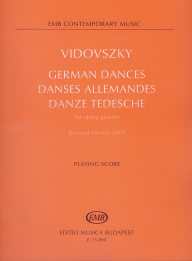
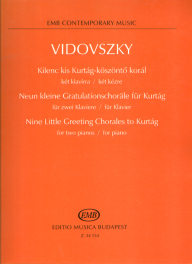
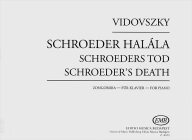
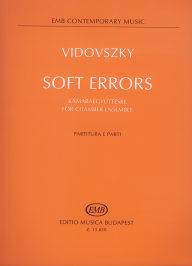
Works (selection)Double (1972) for two prepared piano Schroeder’s Death (1974–75) for piano and 2-3 assistants (20–40’) 405 (1979) for prepared piano and chamber ensemble: fl, ob, cl, bsn, hn, tpt, tbn, org, archi (20’) Narcissus and Echo – opera in one act, in 21 short scenes, based on László Ungvárnémeti Tóth’s Narcissus by Ágnes Meller and Judit Rácz (1980–81) for 4 soloists (sopr, a, t, b), female choir and chamber ensemble: cl, tpt, perc, pf, vln, vc, (24)’ Romantic Readings No. 2 (1985) for orchestra (9’) Twelve Duos (1987–89) for violin and viola (18–20’) German Dances (1989) for string quartet (12–14’) Soft Errors (1989) for chamber ensemble: fl (afl), cl, hn, cel, vla, cb (10’) Studies for MIDI-Piano (in 5 volumes) (1990– ) (4–5th volumes in progress) Nine Little Greeting Chorales to Kurtág (1996) for piano or two pianos (15’) Zwölf Streichquartette (2000) (45–50’) |