English
 Español
 Français
 Magyar
 日本語
日本語 Polski
 Română
 Slovenský
 Slovenščina
 中文
中文Der Weg der Musikwerke vom Komponisten zum Interpreten
Die Aufgabe eines Musikverlags besteht darin, die musikalischen Gedanken der Komponisten in eine für die Interpreten gut lesbare, inspirierende und gut nutzbare Form zu bringen; für die Bekanntmachung, Verbreitung und rechtmäßige Nutzung der Werke zu sorgen. Mit der Erfahrung von drei Vierteljahrhunderten im Rücken erfüllen wir diese ehrenvolle Aufgabe kompetent, engagiert und mit Begeisterung.
Wir danken den Komponisten und Musikpädagogen dafür, dass sie uns die Betreuung ihrer Werke anvertrauen.
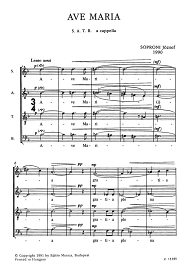
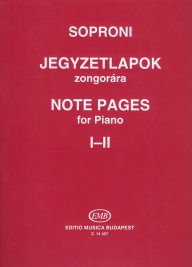
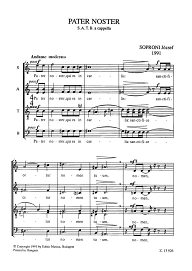
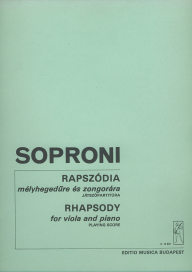
Soproni, József

Biography
He was born on 4 October 1930 in Sopron. He started to play the piano in the music school of his hometown when he was six. He also completed the secondary school there, in the Széchenyi Grammar School. In 1949 he was accepted for the Ferenc Liszt Academy of Music in Budapest, where he studied with János Viski. He graduated in 1956. In 1962 he attended the Darmstadt summer courses and for the next three years composed only studies.
From 1957 on, he worked as a lecturer in music theory and composition for fifteen years in the Béla Bartók Secondary School for Music. Since 1962 he has been giving lectures at the Music Academy. In 1968 he became a reader there and since 1974 he has been a university professor at the Academy. During these years he was teaching counterpoint, score reading and composition. From 1988 to 1994 he was rector of the Ferenc Liszt Music Academy, and at the moment he is a professor emeritus there.
His prizes and awards
Erkel Prize (1974); Artist of Merit (1981); Bartók–Pásztory Award (1987, 2002); Outstanding Artist (1990); Kossuth Prize (1999); Péter Pázmány Prize (1999); Artisjus Prize (2008)