English
 Español
 Français
 Magyar
 日本語
日本語 Polski
 Română
 Slovenský
 Slovenščina
 中文
中文Der Weg der Musikwerke vom Komponisten zum Interpreten
Die Aufgabe eines Musikverlags besteht darin, die musikalischen Gedanken der Komponisten in eine für die Interpreten gut lesbare, inspirierende und gut nutzbare Form zu bringen; für die Bekanntmachung, Verbreitung und rechtmäßige Nutzung der Werke zu sorgen. Mit der Erfahrung von drei Vierteljahrhunderten im Rücken erfüllen wir diese ehrenvolle Aufgabe kompetent, engagiert und mit Begeisterung.
Wir danken den Komponisten und Musikpädagogen dafür, dass sie uns die Betreuung ihrer Werke anvertrauen.
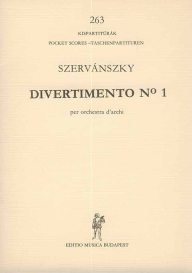
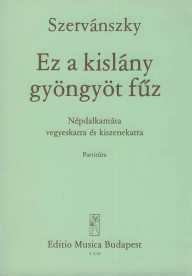
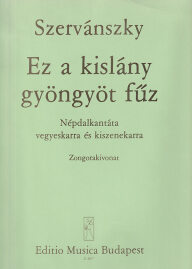
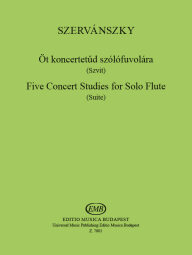
Szervánszky, Endre
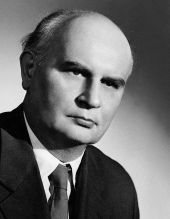 Szervánszky was a master of carefully elaborated forms. Because of his special feeling for quality and his self-discipline his œuvre is not too voluminous, but in respect of their form and richness of tone colour his works are among the finest of their time. In addition to compositions in various vocal and instrumental genres he also wrote music for the theatre and film soundtracks.
From the beginning of his career his art was strongly influenced by the heritage of Bartók. After World War II his inclination towards experimentation and his individual character as a composer became apparent at first in serene and idyllic works. Later the darker tones of more sombre expressivity appeared in his music alongside the pentatonic or modal, tonal sound inspired by folk music, and the shaping became freer.
Szervánszky was the first composer in Hungary to compose twelve-tone music. In his Six Pieces for Orchestra (1959) he adapted the achievements of the second Viennese School within the framework of Hungarian musical tradition. With this composition he paved the way for the younger generations interested in western trends in contemporary music.
Biography
Endre Szervánszky was born in Kistétény (now Budatétény) on December 27, 1911. Between 1922 and 1927 he studied clarinet at the Academy of Music in Budapest, then worked in several orchestras as clarinettist until 1931. Between 1931 and 1936 he studied composition with Albert Siklós at the Academy of Music in Budapest. Until 1941 he taught music theory in music schools and made orchestrations for Hungarian Radio. From 1941 to 1948 he taught composition and music theory at the National Music School in Budapest. From 1949 until his death, he was a professor of composition at the Academy of Music in Budapest. In addition to his work as a composer and teacher, between 1945 and 1949 he wrote music criticism for the Szabad Nép.
His prizes and awards