Deutsch
 English
 Español
 Magyar
 日本語
 Polski
 Română
 Slovenský
 Slovenščina
 中文
Le parcours des œuvres musicales, de l’auteur à l’interprète
La mission d’un éditeur de musique est de transformer les manuscrits, qu’ils soient sur papier ou sous forme numérique, en partitions lisibles, inspirantes et faciles à utiliser pour les interprètes, ainsi que d’assurer la promotion, la diffusion et l’utilisation légale des œuvres.
Forts de 75 ans d’expérience, nous accomplissons cette noble mission avec soin, engagement et enthousiasme.
Nous remercions les compositeurs et les professeurs de musique qui nous confient leurs œuvres.
S
Sugár, Rezső
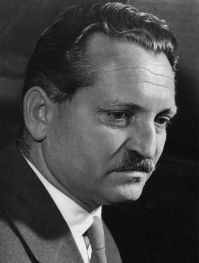 Rezső Sugár was a representative of remarkable talent of the generations of Hungarian composers brought up by Kodály, and one of the most versatile of them. In his youth, he wrote mostly chamber music. There followed oratorios and cantatas, all of which may be compared with the oratorios of Honegger. Drawing on Hungarian history and folklore, Sugár developed an individual style with nationalist and neo-classical affinities; the orchestral works of the 1960s show the influence of Bartókian form. In his last compositions his style arrived at the avant-garde musical language of the age, but in essence he remained loyal to the legacy of Bartók’s music.
Biography
Rezső Sugár was born in Budapest on 9 October, 1919 and he died there on 22 September, 1988. He studied composition with Zoltán Kodály at the Budapest Academy of Music (1937–42), and concurrently attended courses in philosophy at the university. Between 1946 and 1949, Sugár was on the staff of the Municipal Upper Music School, subsequently he taught composition at the Béla Bartók Secondary Music School (1949–1966), at the Teachers’ Training college of the Budapest Academy of Music (1966–1968) and finally at the Academy of Music, as head of the composition department (1968–79).
Rezső Sugár was born in Budapest on 9 October, 1919 and he died there on 22 September, 1988. He studied composition with Zoltán Kodály at the Budapest Academy of Music (1937–42), and concurrently attended courses in philosophy at the university. Between 1946 and 1949, Sugár was on the staff of the Municipal Upper Music School, subsequently he taught composition at the Béla Bartók Secondary Music School (1949–1966), at the Teachers’ Training college of the Budapest Academy of Music (1966–1968) and finally at the Academy of Music, as head of the composition department (1968–79).
His prizes and awards
Erkel Prize (1953); Kossuth Prize (1954); Artist of Merit (1976); Bartók–Pásztory Award (1986)