Deutsch
 English
 Español
 Français
 Magyar
 日本語
日本語 Română
 Slovenský
 Slovenščina
 中文
中文Droga utworów muzycznych od kompozytora do wykonawcy
Zadaniem wydawcy muzycznego jest nadawanie muzycznym myślom kompozytorów formy odpowiednio czytelnej, inspirującej i użytecznej dla wykonawców; dbanie o popularyzację, rozpowszechnianie i zgodne z prawem wykorzystanie utworów. Dzięki trzem czwartym wieku doświadczenia wykonujemy tę zaszczytną pracę fachowo, z zaangażowaniem i entuzjazmem.
Dziękujemy kompozytorom i pedagogom muzycznym za powierzenie nam opieki nad ich utworami.
S
Sugár, Rezső
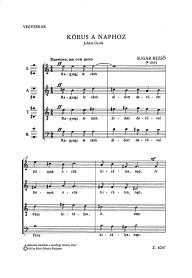
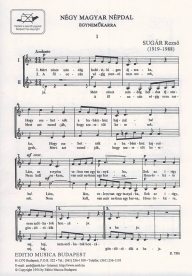
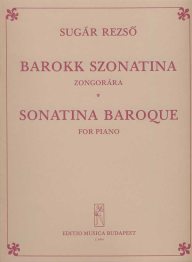
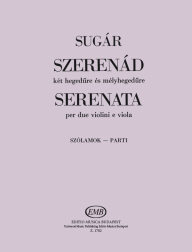
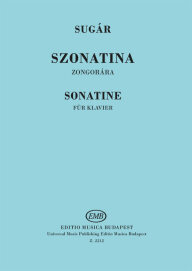
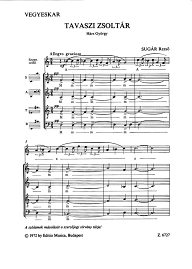
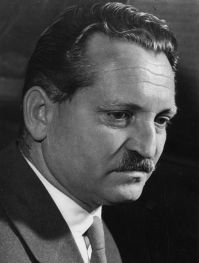 Rezső Sugár was a representative of remarkable talent of the generations of Hungarian composers brought up by Kodály, and one of the most versatile of them. In his youth, he wrote mostly chamber music. There followed oratorios and cantatas, all of which may be compared with the oratorios of Honegger. Drawing on Hungarian history and folklore, Sugár developed an individual style with nationalist and neo-classical affinities; the orchestral works of the 1960s show the influence of Bartókian form. In his last compositions his style arrived at the avant-garde musical language of the age, but in essence he remained loyal to the legacy of Bartók’s music.
Biography
Rezső Sugár was born in Budapest on 9 October, 1919 and he died there on 22 September, 1988. He studied composition with Zoltán Kodály at the Budapest Academy of Music (1937–42), and concurrently attended courses in philosophy at the university. Between 1946 and 1949, Sugár was on the staff of the Municipal Upper Music School, subsequently he taught composition at the Béla Bartók Secondary Music School (1949–1966), at the Teachers’ Training college of the Budapest Academy of Music (1966–1968) and finally at the Academy of Music, as head of the composition department (1968–79).
Rezső Sugár was born in Budapest on 9 October, 1919 and he died there on 22 September, 1988. He studied composition with Zoltán Kodály at the Budapest Academy of Music (1937–42), and concurrently attended courses in philosophy at the university. Between 1946 and 1949, Sugár was on the staff of the Municipal Upper Music School, subsequently he taught composition at the Béla Bartók Secondary Music School (1949–1966), at the Teachers’ Training college of the Budapest Academy of Music (1966–1968) and finally at the Academy of Music, as head of the composition department (1968–79).
His prizes and awards
Erkel Prize (1953); Kossuth Prize (1954); Artist of Merit (1976); Bartók–Pásztory Award (1986)