Deutsch
 English
 Español
 Magyar
 日本語
日本語 Polski
 Română
 Slovenský
 Slovenščina
 中文
中文Le parcours des œuvres musicales, de l’auteur à l’interprète
La mission d’un éditeur de musique est de transformer les manuscrits, qu’ils soient sur papier ou sous forme numérique, en partitions lisibles, inspirantes et faciles à utiliser pour les interprètes, ainsi que d’assurer la promotion, la diffusion et l’utilisation légale des œuvres.
Forts de 75 ans d’expérience, nous accomplissons cette noble mission avec soin, engagement et enthousiasme.
Nous remercions les compositeurs et les professeurs de musique qui nous confient leurs œuvres.
S
V
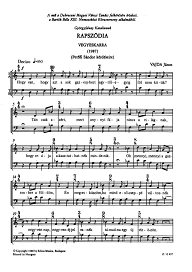
Vajda, János
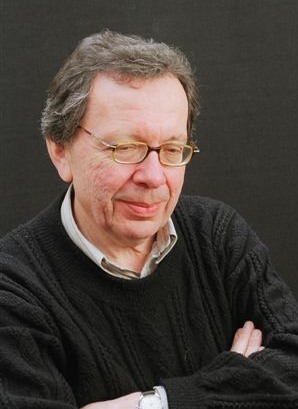 His early creative period was characterized by free dodecaphony, then the use of repetitive techniques. This gave place later to a neoromantic, neotonal orientation. He is an important composer for the theatre, to whom a lighter tone and humorous devices are not alien. Through his handling of sound and his formal devices he likes to make frequent allusion to earlier periods in musical tradition. With his art that is rich in character he has evolved a style that is more easily acceptable to a wider audience as well. In addition to theatrical works, ballets and vocal works he also composes orchestral, chamber and solo pieces.
Biography
János Vajda was born in Miskolc on October 8, 1949. Between 1968 and 1973 he studied conducting under István Párkai and between 1970 and 1975 composition under Emil Petrovics at the Liszt Ferenc Academy of Music, Budapest. From 1974 to 1979 he worked as répétiteur with the choir of Hungarian Radio and Television; between 1979 and 1980 he studied composition in Amsterdam on a scholarship. Since 1981 he has been teaching at the Music Academy in Budapest.His prizes and awards
Erkel Prize (1981); Bartók–Pásztory Award (1990); Kossuth Prize (2003); Artisjus Prize (2008)