Deutsch
 English
 Español
 Français
 Magyar
 日本語
日本語 Polski
 Română
 Slovenský
 Slovenščina
音乐作品从作者到演奏者的旅程
音乐出版社的任务,是将手稿(无论是纸质还是电子版)整理成演奏者易于阅读、富有启发性且便于使用的形式;并确保作品得到推广、发行和合法使用。
凭借75年的经验,我们以审慎、投入和热忱从事这项崇高的工作。
我们感谢将其作品托付给我们的作曲家和音乐教师。
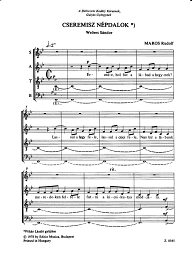
Maros, Rudolf
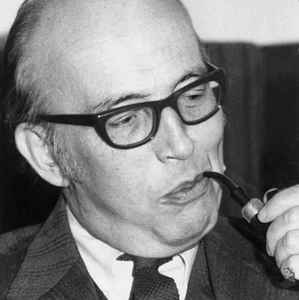 He began his career as a pupil of Zoltán Kodály. Although he could sample in 1949 some Western experiments in music at a master’s course held by Alois Hába, the decisive influences on his style were from Kodály and from Bartók, particularly from the discovery of the classicizing tones of the music of Bartók’s final years. Maros, up to the end of the 1950s, became one of the clearest and most successful exponents in Hungary of this folkloristic national classicism.
After the 1956 Revolution, Hungarian music moved steadily closer to West European models, which had been dismissed hitherto. Maros was among the first to apply knowledge of the expressionist Bartók, and of Webern, the Polish avantgarde and the Darmstadt serialists, to re-learning composition techniques and breaking with Hungarian traditions of the first half of the century. His first Western-style orchestral works ‒ the three Euphonies (1963‒65) ‒ sought a modern orchestral sound and came to serve as a model to be followed in Hungary. Yet his strong attraction to Hungarian tradition turned him back to more conservative composing from the 1970s onwards. In a word, his life’s work in orchestral and chamber music marked an attempt to balance modernity and tradition.
Biography
He died on 3 August, 1982 in Budapest.
His prizes and awards
Erkel Prize (1954, 1955 and 1957); Merited Artist of the Hungarian People’s Republic (1973); Outstanding Artist (1980)