Deutsch
 English
 Español
 Français
 Magyar
 日本語
日本語 Polski
 Română
 Slovenščina
 中文
中文Cesta hudobných diel od autora k interpretovi
Úlohou hudobného vydavateľstva je dať hudobným myšlienkam autorov podobu, ktorá je pre interpretov dobre čitateľná, inšpiratívna a prakticky použiteľná; postarať sa o propagáciu, distribúciu a zákonné využívanie diel. S trojštvrťstoročnými skúsenosťami za sebou vykonávame túto čestnú prácu odborne, s oddanosťou a nadšením.
Ďakujeme skladateľom a pedagógom hudby, že nám zverujú starostlivosť o svoje diela.
Láng, István
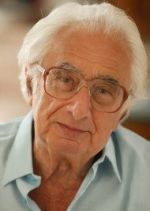 The art of István Láng is fundamentally dramatic. In his works a profusion of themes and characters is combined with a commitment to music as a humane art. Precisely for this reason he places more emphasis on intensity of expression than on purely intellectual and structural beauty of shaping. His works feature both contrapuntal and aleatoric or serial and other modes of construction based on mathematical proportions. Characteristically, he exploits to the full the possible ways of creating sound, and to this end makes use of peculiar effects and playing techniques, and also unusual combinations of instruments. He composes in theatrical, vocal and instrumental genres.
Biography
István Láng was born in Budapest on March 1, 1933. After taking music lessons privately, between 1950 and 1958 he studied composition with János Viski and Ferenc Szabó at the Academy of Music in Budapest. He worked as an assistant lecturer under Kálmán Nádasdy at the Academy of Dramatic and Film Arts in Budapest between 1957 and 1960. In 1958 he visited the Warsaw Autumn, where he heard works by Stockhausen, Nono, Lutosławski and Cage. These experiences totally transformed his musical thinking. Electronic music affected him deeply. On his return home he published an article about the necessity of establishing a studio for electronic music in Hungary. In 1963 he took part in the International Summer Courses for New Music in Darmstadt, where he attended lectures given by Stockhausen, Ligeti, Boulez and Berio. Between 1966 and 1984 he was musical advisor at the State Puppet Theatre. Between 1973 and 2007 he taught transposition and score-reading, and later chamber music, at the Liszt Academy of Music, Budapest.
His prizes and awards
First prize in the Ludwigshafen Composers’ Competition (1961); Erkel Prize (1968, 1975); Artist of Merit of the Hungarian People’s Republic (1985); Bartók–Pásztory Award (1994); Artisjus Prize (2005); Commander’s Cross of the Order of Merit of the Hungarian Republic (2009)