Deutsch
 English
 Español
 Français
 Magyar
 日本語
 Polski
 Slovenský
 Slovenščina
 中文
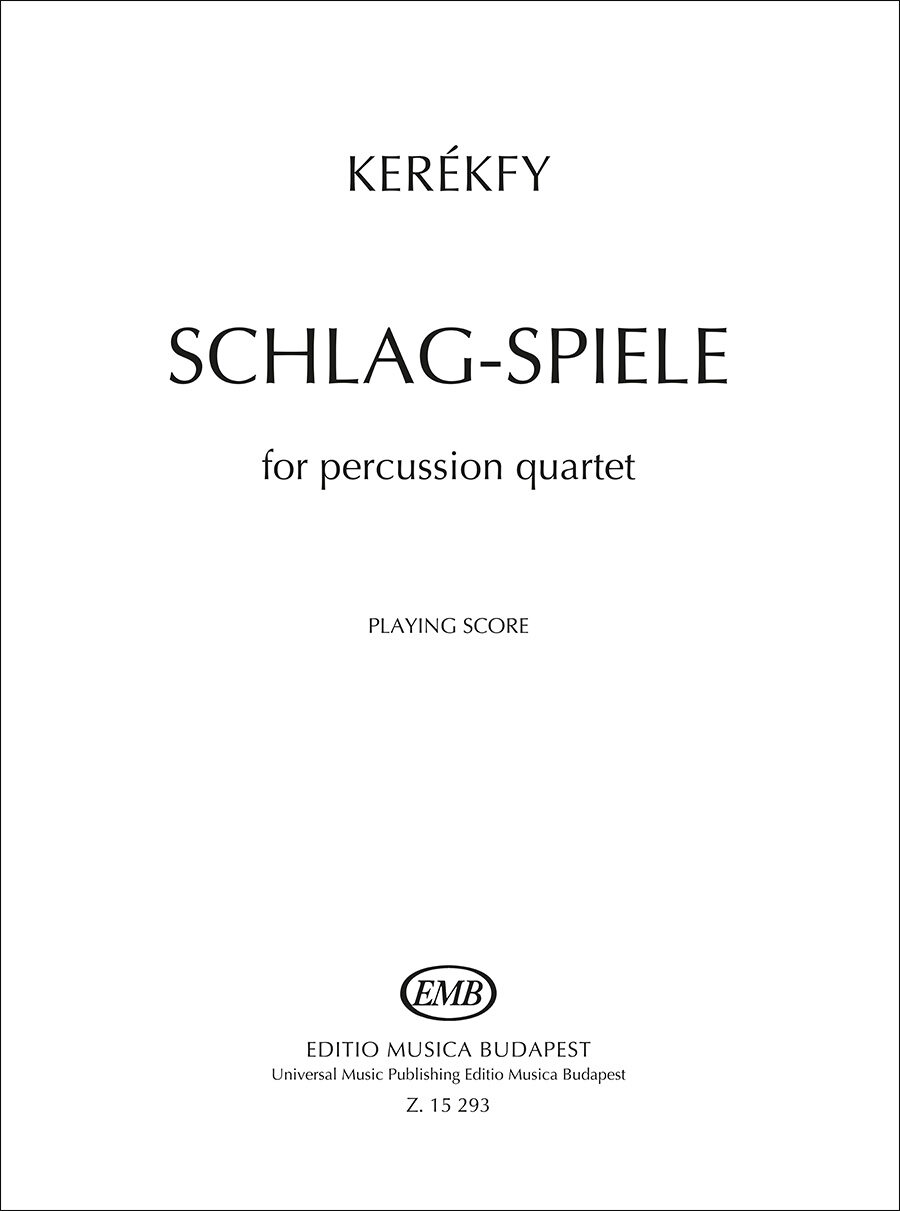
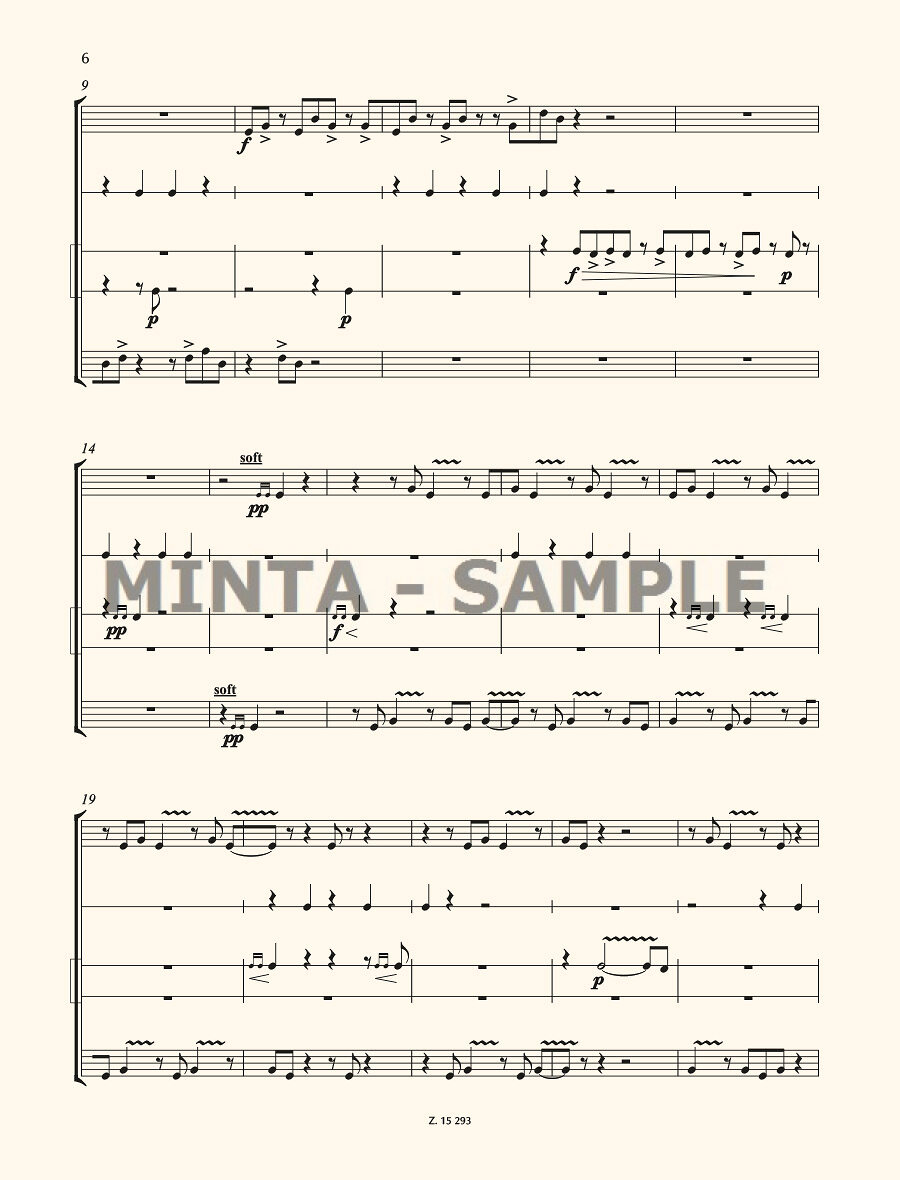
Kerékfy Márton: Schlag-Spiele
for percussion quartet
Partitură de executie
''The title emphasises the playful nature of the composition: Schlag-Spiele is a play with a few elementary rhythmic patterns, a play with the sounds of instruments made from different materials, and, at the same time, a game played by four musicians. Like every game, it has its own rules'' writes the composer.
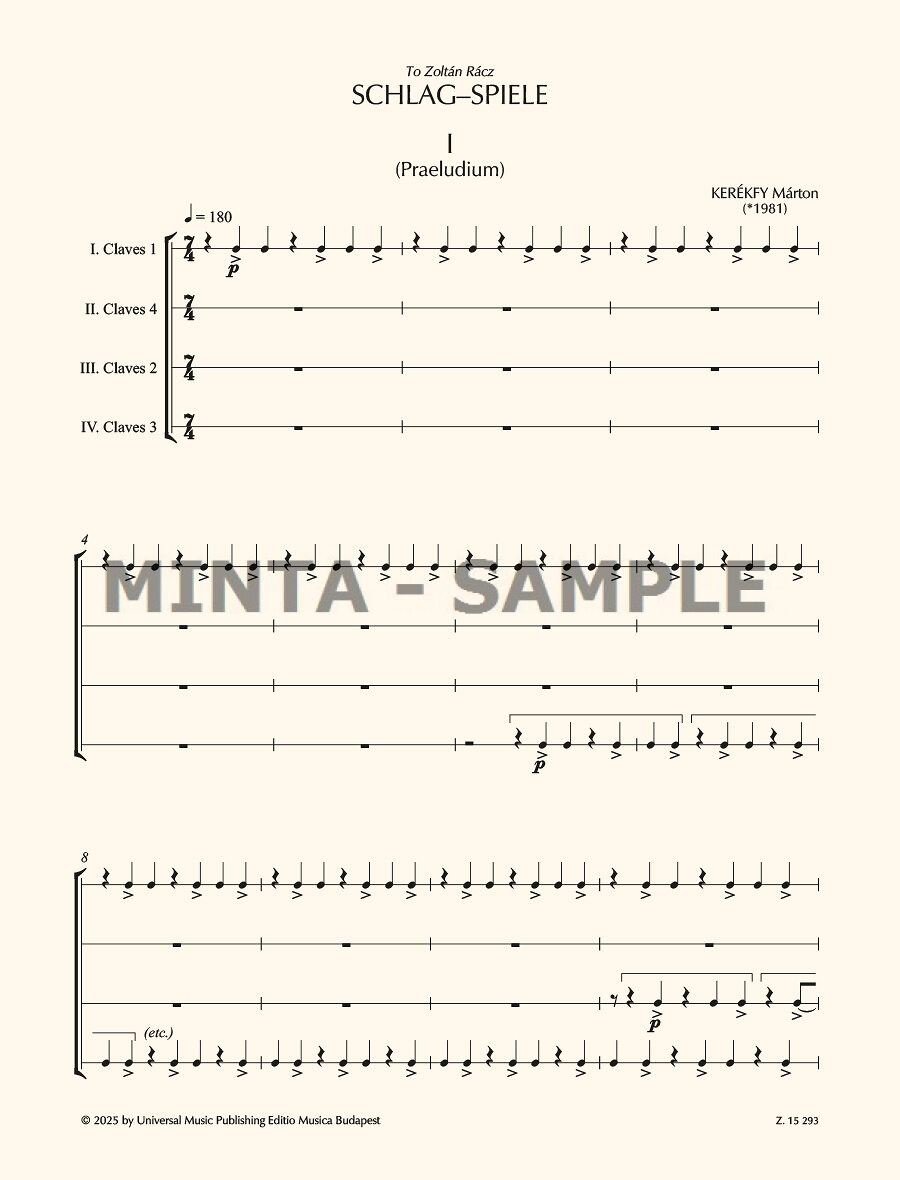
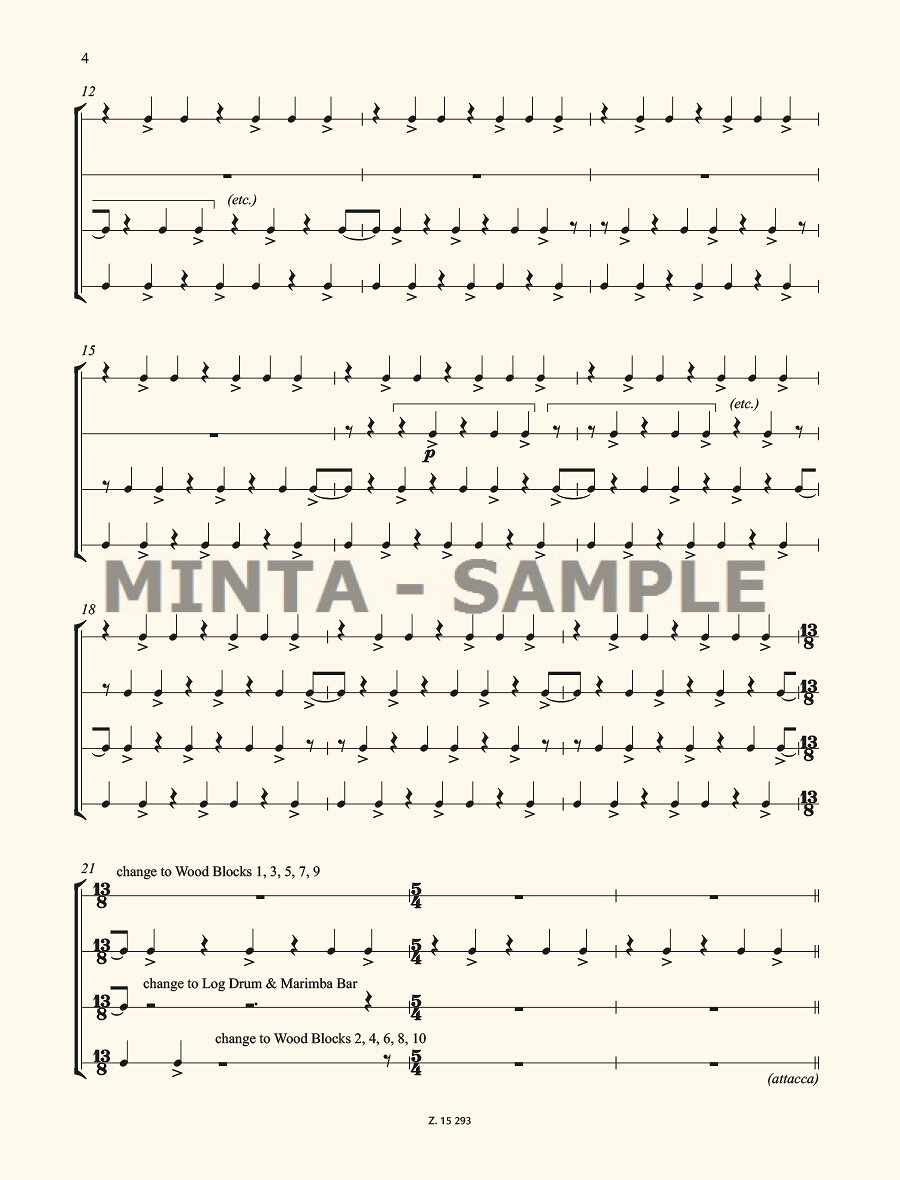
In this musical game, each of the four performers plays instruments made of wood, skin and metal. The first, middle and final movements form the structural pillars of the composition, each featuring four identical instruments: first claves, then frame drums, and finally crotales, or small antique cymbals. All three movements are built from the same two recurring rhythmic patterns: 2+3 and 1+2 beats. The same rhythmic foundation thus returns in three distinct sound worlds, linking the beginning, midpoint and conclusion of the work.
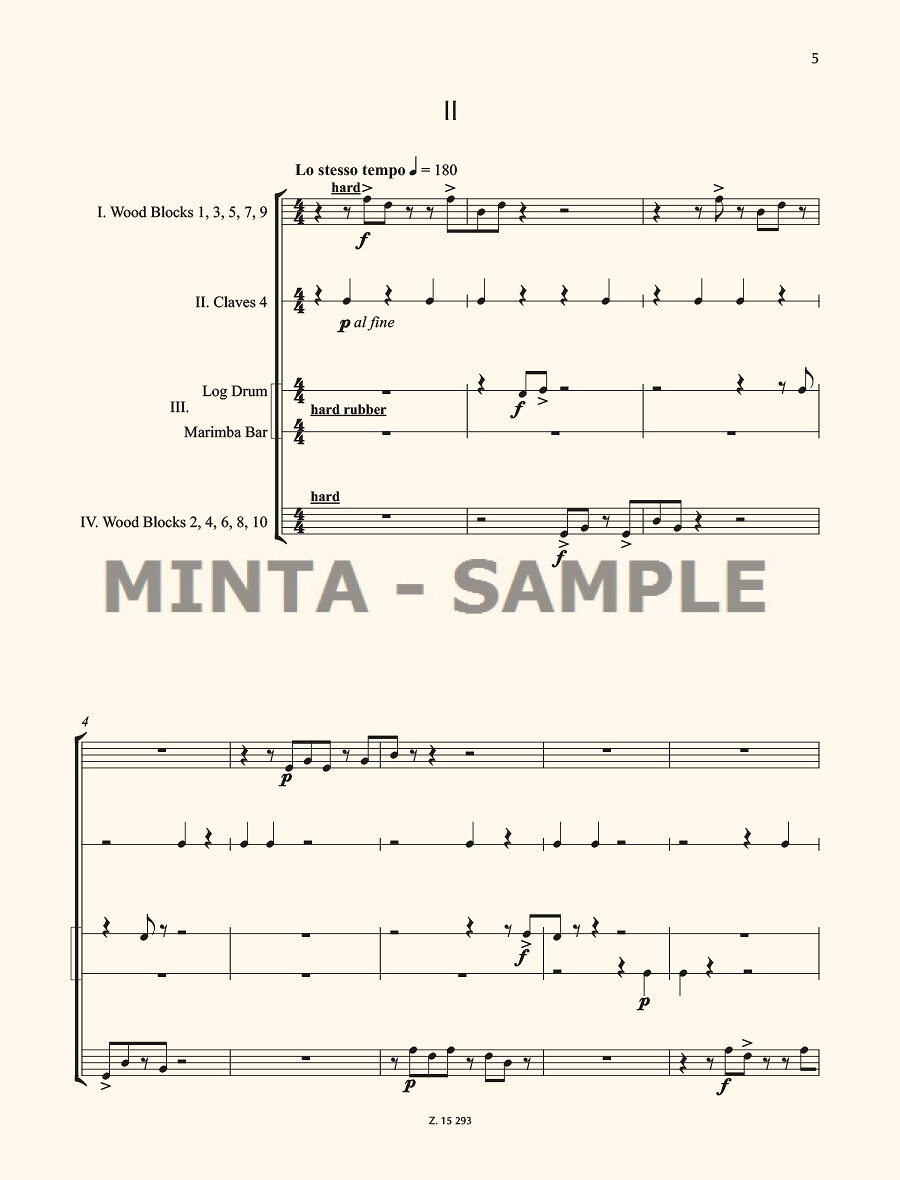
The intervening movements explore transitions and encounters between the instrument families. In the second movement, the claves are joined by other wooden instruments; in the third, a bass drum enters the texture. Drums come to the fore in the fourth movement, while the introduction of Chinese gongs in the sixth prepares the way for the seventh movement’s ensemble of metal instruments. In the penultimate movement, all three instrument families sound together, while musical material heard earlier returns. The gradual transformation of timbre creates a continuous trajectory across the composition, taking the listener from wooden knocking sounds through drumming to metallic ringing and resonance.