English
 Español
 Français
 Magyar
 Polski
 Română
 Slovenský
 Slovenščina
 中文
中文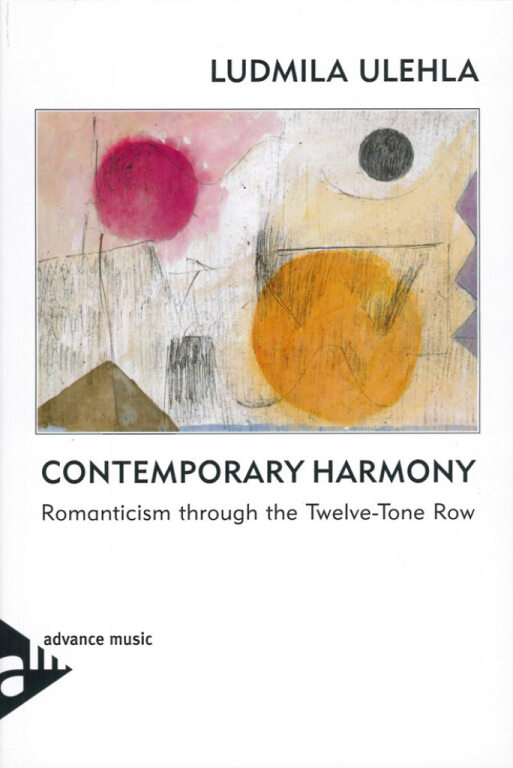
Nicht verfügbar
Ulehla, Ludmila: Contemporary Harmony
Besetzung: Musiktheorie
Sprache: englisch
Format: 17 x 24 cm (B/5)
Gewicht: 1.12 kg
Erscheinungsjahr: 1. Juni 1994
Verlag: Advance Music
Artikelnummer: ADV11400
ISMN: 9790206303159
The understanding of the musical techniques of composition cannot be reduced to a handbook of simplified rules. Music is complex and ever changing. It is the purpose of this book to trace the path of musical growth from the late Romantic period to the serial techniques of the contemporary composer. Through the detailed analysis of the musical characteristics that dominate a specific style of writing, a graduated plan is organized and presented here in the form of explanations and exercises. A new analytical method substitutes for the diatonic figured bass and makes exercises and the analysis of non-diatonic literature more manageable. The explanations describing each technique are thorough. They are designed to help the teacher and the student see the many extenuating circumstances that affect a particular analytical decision. More important than a dogmatic decision on a particular key center or a root tone, for example, is the understanding of why such an underdeterminate condition ma y exist.
Inhalt | ||
|---|---|---|
| 1. |
Part I: Musical influences present in 1900
|
|
| 2. |
Chapter 1: Rhythmic and melodic structure
|
|
| 3. |
Chapter 2: Intervallic unity
|
|
| 4. |
Chapter 3: Harmonic growth
|
|
| 5. |
Chapter 4: Details concerning the ninth chord
|
|
| 6. |
Chapter 5: Eleventh and thirteenth chords
|
|
| 7. |
Chapter 6: Leading-tone chord
|
|
| 8. |
Chapter 7: Modern application
|
|
| 9. |
Part II: Impressionism
|
|
| 10. |
Chapter 8: Modal influence
|
|
| 11. |
Chapter 9: Influence of modes on harmony
|
|
| 12. |
Chapter 10: Unrestricted melodic movement of all chord members
|
|
| 13. |
Chapter 11: The tritone, the whole-tone scale, and whole-tone dominants
|
|
| 14. |
Part III: The Rise of Modern Dissonance
|
|
| 15. |
Chapter 12: Free counterpoint and the twelve-tone scale
|
|
| 16. |
Chapter 13: Bichordal writing and polytonality
|
|
| 17. |
Part IV: Contrapuntal Writing
|
|
| 18. |
Chapter 14: Linear Roots
|
|
| 19. |
Chapter 15: Two-part writing
|
|
| 20. |
Chapter 16: Intervallic structures in the writing of three or more parts
|
|
| 21. |
Part V: Intervallic Structures in Homophonic Textures
|
|
| 22. |
Chapter 17: Fourth chords and perfect fifths
|
|
| 23. |
Chapter 18: Intervallic structures emanating from bass intervals of sixths, thirds, sevenths, and seconds
|
|
| 24. |
Chapter 19: The control of dissonance
|
|
| 25. |
Part VI: The Twelve-Tone Row
|
|
| 26. |
Chapter 20: Its strict application
|
|
| 27. |
Chapter 21: Atonality
|
|
| 28. |
Chapter 22: A summary of procedures for contemporary Analysis
|
|
| 29. |
Acknowledgments
|
|
| 30. |
Index of Musical examples
|
|