English
 Español
 Français
 Magyar
 日本語
日本語 Polski
 Română
 Slovenský
 Slovenščina
 中文
中文Der Weg der Musikwerke vom Komponisten zum Interpreten
Die Aufgabe eines Musikverlags besteht darin, die musikalischen Gedanken der Komponisten in eine für die Interpreten gut lesbare, inspirierende und gut nutzbare Form zu bringen; für die Bekanntmachung, Verbreitung und rechtmäßige Nutzung der Werke zu sorgen. Mit der Erfahrung von drei Vierteljahrhunderten im Rücken erfüllen wir diese ehrenvolle Aufgabe kompetent, engagiert und mit Begeisterung.
Wir danken den Komponisten und Musikpädagogen dafür, dass sie uns die Betreuung ihrer Werke anvertrauen.
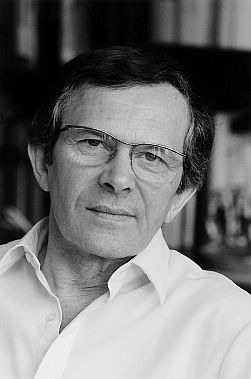
Bozay, Attila
Biography
He was born at Balatonfűzfő on 11 August, 1939. He studied composition with Ferenc Farkas at the Ferenc Liszt Academy of Music in Budapest, graduating in 1962. In 1962–63 he taught music theory at the Conservatory in Szeged; between 1963 and 1966 he was a music producer with Hungarian Radio. In 1967 he studied in Paris on a UNESCO scholarship, then worked as a free-lance composer. From 1979 until his death, he taught composition at the Ferenc Liszt Academy of Music in Budapest. Between 1990 and 1993 he was also the managing director of the Hungarian National Philharmonia. Besides his two operas his oeuvre consisted mainly of choral music, symphonic works and solo instrumental and chamber music. In his opera Csongor and Tünde (1979–84), based on a play by Mihály Vörösmarty, he worked out the ten-tone system that he was to use consistently for the rest of his life. His works were performed at numerous international festivals (ISCM festivals in Prague and London, the Holland Festival, the Warsaw Autumn, the Contemporary Music Festival in Witten, the Zagreb Biennale and the Musikprotokoll, Graz). He frequently took part as a zither or recorder player in performances of his own compositions. He died on 14 September 1999, in Gönc (north-east Hungary).
His prizes and awards